Training that inspires: Resident physician commits to career on The Wright Center’s 50th anniversary
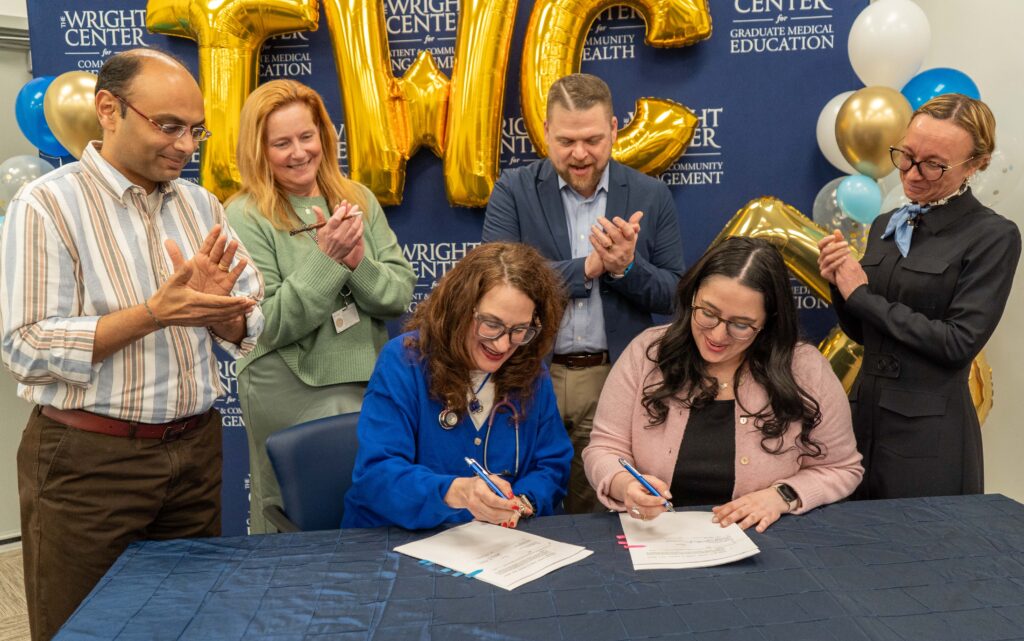
During a celebration of The Wright Centers for Community Health and Graduate Medical Education’s 50th anniversary, Dr. Sandra Rabat, a 2026 graduate of The Wright Center’s Internal Medicine Residency Program, signed a contract to become one of the newest primary care physicians at The Wright Center. Participating in the contract signing, seated from left, are Dr. Linda Thomas-Hemak, president and CEO of The Wright Center, and Dr. Rabat; standing, Dr. Jignesh Sheth, senior vice president and enterprise chief operations and strategy officer; Jennifer Walsh, Esq., senior vice president of enterprise integrity, chief legal and governance officer; Brian Ebersole, senior vice president of strategic enterprise and ecosystem development; and Dr. Erin McFadden, senior vice president and chief medical officer.
When Sandra Rabat, D.O., first arrived in Scranton six years ago, she didn’t realize she was putting down roots for her future.
The 30-year-old Erie, Pennsylvania, native spent three years in the Electric City as a member of the inaugural cohort from A.T. Still University School of Osteopathic Medicine in Arizona (ATSU-SOMA), completing her clinical rotations at The Wright Center for Community Health during medical school. She remained in the region to pursue a three-year Internal Medicine residency with The Wright Center for Graduate Medical Education.
As The Wright Center marked its 50th anniversary – celebrating a legacy of preparing highly skilled, compassionate primary care physicians to expand access to care in Northeast Pennsylvania and underserved communities nationwide – Dr. Rabat signed a contract to continue her career there as one of its newest primary care physicians.
“I’m so proud to be able to sign my contract on our 50th anniversary. How special is it to be a part of something like that?” said Dr. Rabat, who will graduate from The Wright Center for Graduate Medical Education’s Internal Medicine Residency Program on June 20. “Home is where your community is, and I’ve formed a community here in Northeast Pennsylvania.”
The Wright Center’s story began in 1976, when a young oncologist named Dr. Robert E. Wright returned home to Scranton and realized the extent of the physician shortage in Northeast Pennsylvania. With community support and a Primary Care Workforce Development Grant from the U.S. Department of Health and Human Services Bureau of Health Manpower and several smaller grants, he established the Scranton-Temple Residency Program on Feb. 17, 1976. The program, designed to attract medical school graduates to the region for internal medicine residencies, welcomed its inaugural class of six resident physicians one year later.
Since then, the program, which was renamed in its founder’s honor in 2010, has graduated more than 1,100 physicians in a variety of residency and fellowship programs. Those graduates, who hail from all over the world, have gone on to work across the country – including right here in Northeast Pennsylvania.
As part of its mission, The Wright Center has expanded to offer interprofessional training opportunities for a variety of other health care careers, partnering with more than a dozen academic institutions. One such partnership, with ATSU-SOMA, is where Dr. Rabat first became familiar with The Wright Center and the region.
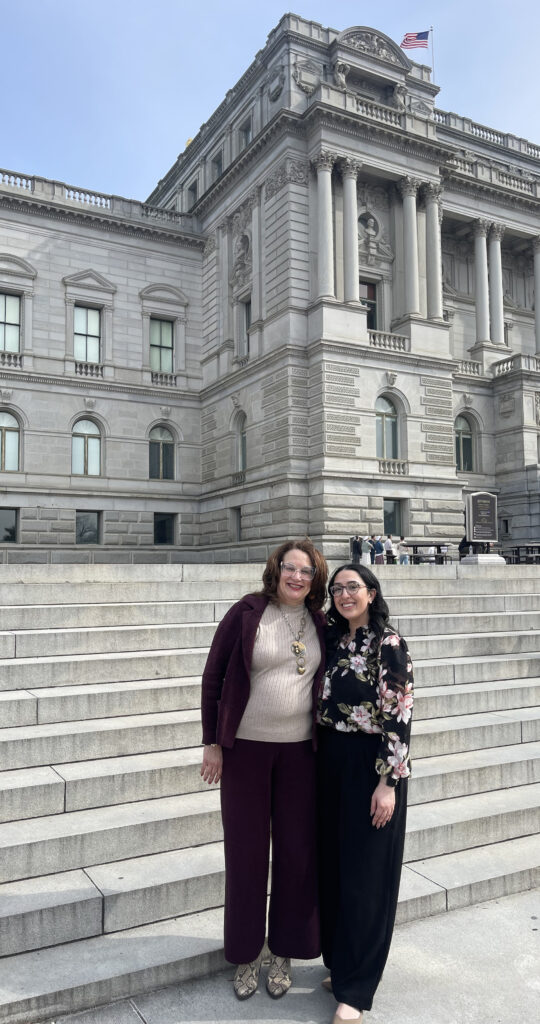
Dr. Linda Thomas-Hemak, president and CEO of The Wright Centers for Community Health and Graduate Medical Education, left, and Dr. Sandra Rabat stand on Capitol Hill in Washington, D.C., after advocating for community health centers.
“Scranton is where I learned to practice medicine in a way that prioritizes compassion, access, and continuity of care,” Dr. Rabat said. “I have built strong relationships with mentors, colleagues, and patients, and that sense of community is something I value deeply. Staying feels like a way to give back by continuing to serve this community and helping to train future physicians with those same values.”
That commitment to patient-centered care is rooted in a personal loss that shaped Dr. Rabat’s path to medicine. After her father’s unexpected death from a heart attack in 2010, when she was a high school freshman, she was inspired to pursue a career focused on helping people live healthier lives. Throughout her journey to become a doctor, she found opportunities to hone her skills and expand her knowledge.
As a medical student, Dr. Rabat joined the Pennsylvania Area Health Education Center’s prestigious Scholars Program to strengthen her focus on caring for vulnerable populations, integrating behavioral health services into primary care, engaging communities, and advancing access to health care for everyone. During her medical residency, she became involved in local and federal advocacy, working alongside colleagues and leaders to champion causes such as the vital role of teaching health centers and the needs of rural and underserved communities. In her last year of residency, she served as chief resident of the Internal Medicine Program, acting as a vital liaison between residents and faculty, managing schedules, mentoring junior residents, and facilitating clinical training.
She is also a passionate advocate of organ donation awareness and advanced care planning services, both of which encourage patients and families to make informed, proactive decisions about their health. She has also led a community-oriented primary care project to increase rates of routine breast cancer screening, emphasizing preventive care and patient education.
“Throughout my training, I developed a deeper understanding of health disparities and the importance of improving how care is delivered,” she said. “I have been especially drawn to prevention and access, whether that is identifying gaps or finding more effective ways to meet patients where they are.”
Her enthusiasm and dedication caught the attention of Wright Center leadership, especially President and CEO Dr. Linda Thomas-Hemak.
“She is an AHEC Scholar, a Pennsylvania resident, and she embodies the idea of mission-driven work,” Dr. Thomas-Hemak said. “Welcoming her as one of our newest primary care physicians is a huge victory for our legacy.”
After graduating from The Wright Center’s Internal Medicine Residency Program in June, Dr. Rabat is looking forward to fully stepping into the role of a primary care physician and building long-term relationships with patients.
“Starting as an attending physician at the same community health center where I trained makes this next step especially powerful,” she said. “It allows me to care for the same communities that shaped me while growing into a new level of responsibility. I feel honored to continue serving these communities and to step into this role with purpose.”