Little changes, big impact: The Wright Center for Community Health’s Diabetes Prevention Program is helping patients improve their overall health

Melissa Germano, a registered dietitian and director of lifestyle modification and preventive medicine at The Wright Center for Community Health, left, talks with Asha, a patient, at a recent National Diabetes Prevention Program class at The Wright Center for Community Health Mid Valley. The 26-session, evidence-based program helps individuals with prediabetes lower their risk of developing Type 2 diabetes.
After moving to Northeast Pennsylvania from their home in Karachi, Pakistan, two and a half years ago, Asha and her family had to adjust to a whole new life.
The family moved to Clarks Summit, Pennsylvania, after Asha’s husband began a local medical residency program. Moving to a new country was an adventure, but it was stressful, too.
Additionally, Asha lacked the credentials required to continue her career as a diagnostic radiologist in the United States. Without the structure of her former routine – and with an array of new American foods to explore – she gained unhealthy weight. She had been diagnosed with prediabetes before immigrating to the United States, a condition in which blood sugar levels are elevated but not high enough for a Type 2 diabetes diagnosis. Asha knew her health was at risk.
“I was very concerned about my increasing weight and my blood sugar levels,” said Asha, who uses one name. “I talked to my primary care provider, Dr. Linda Thomas-Hemak (president and CEO at The Wright Center), and she encouraged me to enroll in a class at The Wright Center to help people like me.”
The Wright Center for Community Health began offering the National Diabetes Prevention Program at its community health centers in Jermyn and Scranton in 2025. The 26-session, evidence-based program helps individuals with prediabetes lower their risk of developing Type 2 diabetes.
November is Diabetes Awareness Month, a time to raise awareness about one of the fastest-growing chronic diseases in the world. An estimated 88 million – more than 1 in 3 – American adults have prediabetes, according to the Centers for Disease Control and Prevention (CDC). More than 80% of people with prediabetes do not know they have it.

Asha reviews material with Melissa Germano, a registered dietitian and director of lifestyle modification and preventive medicine at The Wright Center for Community Health, prior to a National Diabetes Prevention Program class. The class, aimed at people diagnosed with pre-diabetes, has helped Asha remain consistent and motivated as she works to improve her health.
“Type 2 diabetes is a serious, chronic condition that can increase the risk of heart disease, stroke, blindness, and kidney failure,” said Melissa Germano, a registered dietitian and director of lifestyle modification and preventive medicine at The Wright Center. “The Diabetes Prevention Program empowers people with practical, everyday tools – like healthy eating, physical activity, and stress management – to take control of their health and prevent Type 2 diabetes.”
For Asha, the class offered plenty of tips for living a healthier life from Germano and Walter Wanas, a clinical registered dietitian-nutritionist at The Wright Center, and also provided opportunities to connect with others working to improve their health.
“I am new to this country, and I want to interact with people, and this has become one of the ways I do that,” she said. “In class, we’re discussing all sorts of problems and how we can solve them, and it’s very helpful for me.”
The class is packed with useful information, Asha said, including healthy food swaps, ideas for adding more protein into meals, and how to easily incorporate exercise into her daily routine. In addition to helping her lose some weight and develop healthier habits, the class inspired her to organize a yoga club that her friends and family can join virtually, no matter where they live.
“This class helps me with motivation and consistency,” Asha said. “Both of these are very important for me to become a healthier person.”
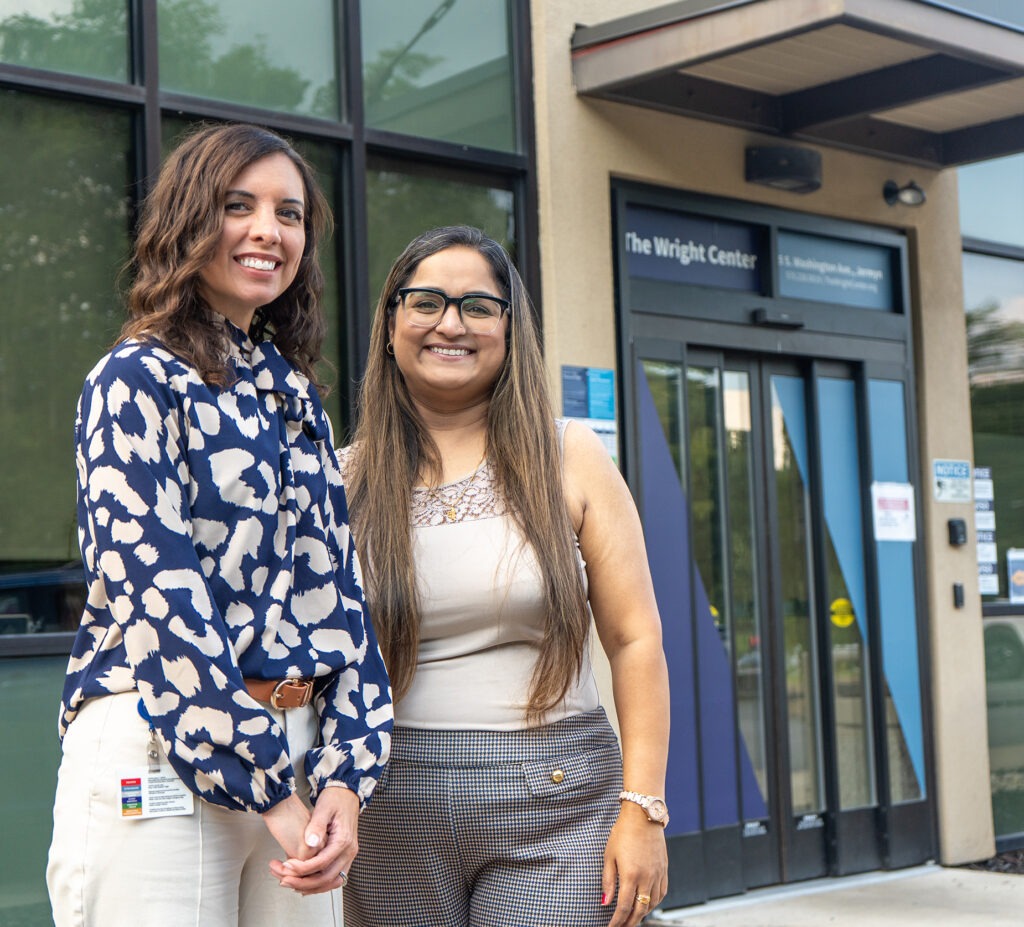
Melissa Germano, a registered dietitian and director of lifestyle modification and preventive medicine at The Wright Center for Community Health, left, goes over material with Asha, a patient participating in the National Diabetes Prevention Program class, at The Wright Center for Community Health Mid Valley.
Germano said it’s rewarding to see patients put what they learn into practice, making small, sustainable changes that add up to a big impact.
“Watching them build confidence, reach their goals, and support one another throughout the program is especially meaningful,” she said. “I’m proud of the commitment each participant has made to improving their health and reducing their risk of developing Type 2 diabetes.”
Asha’s class will conclude in April, with a new class scheduled to begin in fall 2027. To qualify for the program, participants must be at least 18 years old; have a body mass index (BMI) of 25 or higher, or 23 or higher for Asian-American patients; have no prior diagnosis of Type 1 or Type 2 diabetes; and not be pregnant.
Participants must also meet at least one of the following criteria:
● Be previously diagnosed with gestational diabetes (diabetes during pregnancy)
● Received a high-risk result (score of 5 or higher) on a prediabetes risk test at www.cdc.gov/prediabetes.
● Had a blood test result in the prediabetes range within the past year (includes any of the following tests and results):
— Hemoglobin A1C: 5.7%–6.4%
— Fasting plasma glucose: 100–125 mg/dL
— Two-hour plasma glucose (after a 75g glucose load): 140–199 mg/dL
For more information about the National Diabetes Prevention Program or other lifestyle medicine services that The Wright Center offers, visit TheWrightCenter.org/services/ lifestyle-medicine.