Whole-Person Wellness Blog: A mental health awareness month reflection
This month we will hone in on one of our Sanctuary commitments, Emotional Intelligence, and bridge this commitment to our mental health during Mental Health Awareness Month in May.
Pause for a moment and imagine this: You’ve been up all night, and now you still have to make it through a full workday. Your mother has been sick for weeks, weighing heavily on your mind. On top of that, you hit traffic on your way in, and now you’re watching the clock, worried you’ll be late for a presentation you have been working on for the past week.
What emotions would you think are present in this scenario?
– Anxiety?
– Fear?
– Frustration?
– Sadness?
– Hopelessness?
Through Sanctuary, and becoming trauma informed, we recognize it would be pretty difficult to not bring these emotions to work with you. We are human and it can be hard to separate what is happening in your personal life from your professional.
Tools like community meeting can help center the day by asking three simple questions:
1. How are you feeling?
2. What is your goal for today?
3. Who could you ask for help?
This would allow your team to understand and support your experience. Bringing our whole selves to work is something that may be uncomfortable if you were told to leave everything at the door in the past. This is what culture change looks like. It is not a destination, but a journey.
What was described above helps us to work on one of our Sanctuary commitments – Emotional Intelligence. Emotional Intelligence is the ability to identify and manage your own emotions, as well as understand and be aware of the emotions of those around you.
It is important to recognize that no emotion is inherently “good” or “bad” because each one has something to teach us. Next time something shows up for you, try to pause and ask yourself, what is this telling or teaching me? Our society and culture is quick with telling us to suppress, “suck it up,” or “move on.” That can feel dismissive and belittling to the experience we are having.
This in turn, leads to another important topic that ties in with Emotional Intelligence for the month of May: mental health awareness.
Emotional Intelligence is a crucial and vital part of mental health and well-being. The more awareness we have of our own triggers when trauma arises, the better equipped we are to handle, process, and tame those feelings.
Some other benefits of having higher Emotional Intelligence include increased empathy for ourselves and others, the ability to build and maintain healthy relationships, and assertiveness towards holding boundaries.
I am deeply grateful for the opportunity to hear my colleagues’ lived experiences and to connect those stories to the broader themes of Emotional Intelligence and mental health. Here, Dana Knorr, one of our clinical administrative assistants, shares a glimpse into her journey:
“When I was younger, I went through a very rough childhood. I experienced trauma that stayed with me and shaped much of my life. Because of that, along with my upbringing, my mental health has been something I’ve had to work through every single day – even now.”
“I’ve always been an overthinker. For a long time, I kept to myself and avoided putting myself out there, often out of fear of rejection and other worries. There were even times in my life when I struggled so deeply that I tried to end my life. Looking back now, I’m incredibly grateful I’m still here – for myself, but especially for my family and my kids.”
“I continue to face challenges with depression, anxiety, and PTSD. Some days are harder than others, but I’ve come to recognize how far I’ve come. I truly believe that my faith carried me through some of the darkest times in my life. The trials I’ve faced didn’t break me; they made me stronger.”
“Even now, it amazes me that I’m still here, able to reflect on my life with a more positive mindset. For a long time, I saw everything through a negative lens. But over time, I’ve grown. I’ve learned that holding everything inside only makes things heavier. It affects your thoughts, your emotions, and your overall well-being.”
“One of the biggest lessons I’ve learned is the importance of expressing how I feel. Instead of bottling things up, I now try to communicate when someone has hurt or upset me, and I do my best to do it with love and understanding.”
“I care deeply about others and genuinely want to help when I can. If there’s one thing my experiences have taught me, it’s that no one should feel like they have to carry everything alone.”
“My story is full of challenges, but it’s also one of resilience, growth, and hope.”
This month, offer yourself grace, kindness, and the awareness that it is okay to feel, it is okay to struggle, and remember that you are never alone.
Obrigado,
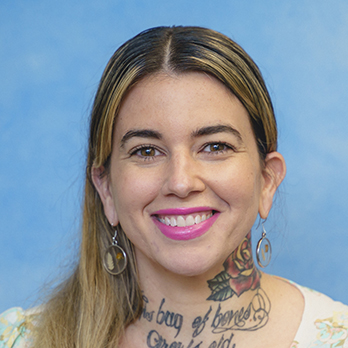
Allison LaRussa, BA, CPS, RYT
Associate Vice President, Health and Wellness