50 years of care, training, transformation
Born from a physician shortage, The Wright Center delivers care, trains future physicians, and reshapes health care far beyond Northeast Pennsylvania
What began as a solution to the physician shortage in Northeast Pennsylvania a half century ago has grown into a healthcare enterprise that serves more than 38,000 patients annually while creating tomorrow’s primary and interprofessional healthcare workforce.
Since 1976, The Wright Centers for Community Health, Graduate Medical Education, and Patient & Community Engagement have been a cornerstone of healthcare in the region. As a physician-led, community-owned nonprofit, The Wright Center employs nearly 670 professionals – including 177 physician resident and fellow physicians and educates nearly 200 interprofessional learners each year. Through strategic partnerships with more than a dozen academic institutions, including A.T. Still University School of Osteopathic Medicine in Arizona and NYU Langone Health, The Wright Center is expanding access to care, improving community health, and shaping the future of healthcare on a national scale.
As a Federally Qualified Health Center Look-Alike (FQLA), The Wright Center operates a growing network of community health centers in Lackawanna, Luzerne, Wayne, and Wyoming counties, including a mobile medical and dental unit, Driving Better Health. Each offers affordable, high-quality, whole-person primary health services to people of all ages, regardless of their insurance status, ZIP code, or ability to pay.
Training for the future
After completing his fellowship in hematology and oncology at the University of Washington in Seattle in 1971, Dr. Robert E. Wright, the namesake founder of The Wright Center, returned home to Lackawanna County, driven by a deep sense of duty to address the critical shortage of specialists in his field.
Recognizing the growing physician shortage in Northeast Pennsylvania and beyond, he grappled with a fundamental challenge: how to continue expanding his and other physicians’ knowledge and expertise while navigating the relentless demands of modern medical practice.
In response, Dr. Wright established the Scranton-Temple Residency Program on Feb. 17, 1976 with community support and a Primary Care Workforce Development Grant from the U.S. Health Resources and Services Administration (HRSA) Bureau of Health Manpower. The program, designed to attract medical school graduates to the region for internal medicine residencies, welcomed its inaugural class of six resident physicians one year later, in 1977.
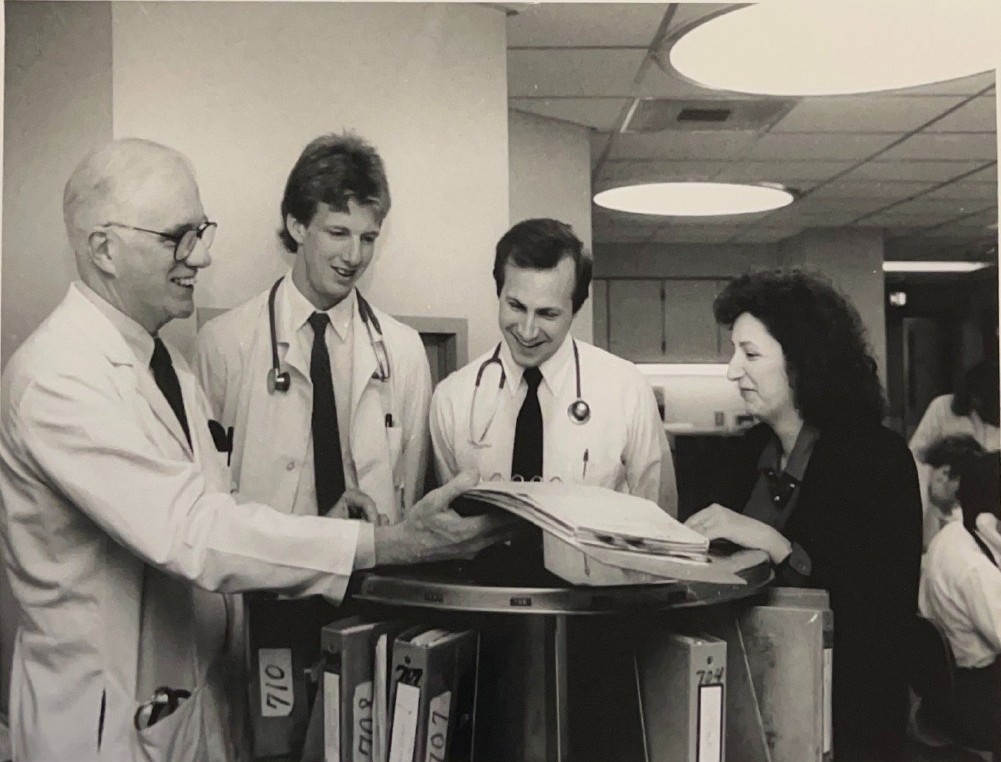
Dr. Robert Wright, far left, reviews at a patient’s chart with several Internal Medicine residents in the early days of what was then known as the Scranton-Temple Residency Program.
Since then, The Wright Center has expanded its accredited physician training programs to include residencies in Physical Medicine & Rehabilitation and Family Medicine, as well as fellowships in Cardiovascular Disease, Gastroenterology, and Geriatrics. To date, its residency and fellowship programs have graduated more than 1,100 physicians, many of whom provide care in underserved communities similar to those where they trained.
In 2011, The Wright Center revolutionized medical education by launching the Graduate Medical Education Safety-Net Consortium (GME-SNC) – an innovative, mission-driven model that seamlessly integrates patient care with workforce development to combat primary care shortages and improve access to care. Through strategic partnerships with The Wright Center’s community health centers and regional healthcare leaders – including Allied Services, Commonwealth Health, Geisinger Health System, and the Veterans Affairs Medical Center – physician residents and fellows are embedded directly within underserved communities, delivering care where it is needed most.
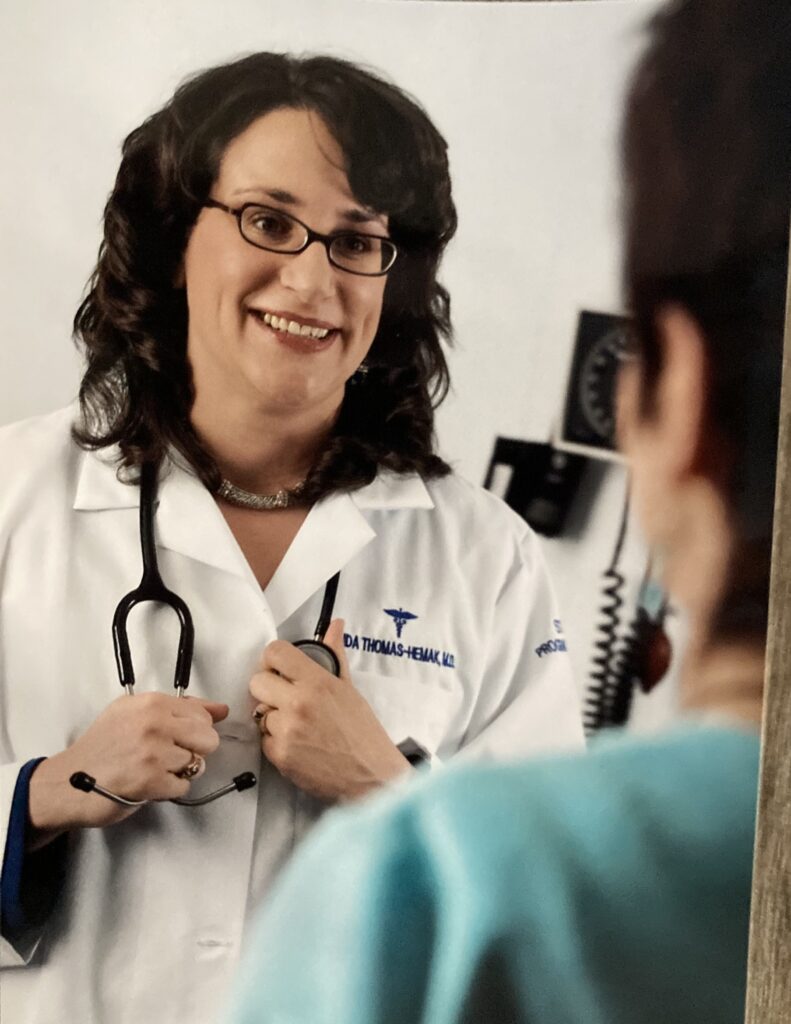
Dr. Linda Thomas-Hemak, our president and CEO, talks to a patient in this photo taken in 2008.
This pioneering approach expands access to high-quality, whole-person primary health services, increases the likelihood of graduates working in underserved areas, improves access to care, and ensures compassionate care is available for every individual.
Today, The Wright Center is one of the nation’s largest Teaching Health Center GME-SNCs funded by HRSA. This replicable and scalable GME-SNC, supported and touted by national accrediting and state licensing agencies, effectively untethers communities from hospital-based workforce generation and the historical hospital-centric dominance of public graduate medical education investments. It bridges the gap between where most care is delivered and where the healthcare workforce is trained and provides access to socially missioned, public-health programming that accelerates primary care solutions.
“Fifty years ago, Dr. Wright ignited a movement that continues to shape the future of healthcare in our region and beyond as The Wright Center expands and evolves innovative, community-driven graduate medical education models that strengthen our workforce, dismantle barriers to care, and ensure healthcare access for everyone,” said Dr. Linda Thomas-Hemak, president and CEO of The Wright Centers for Community Health and Graduate Medical Education. “Together, we are reimagining a future in which the health of our communities is prioritized, the medical profession is reinvigorated, and affordable, whole-person primary and preventive health services are the standard, not the exception.”
Caring for the community
The Wright Center for Community Health, a patient-governed organization, serves patients of all ages, income levels, and insurance statuses through an array of innovative programs and services. In fiscal year 2024-25, more than 40% of its patients were covered by Medicaid or CHIP, just over 20% by Medicare, and more than 6% were uninsured.
During the same fiscal year, The Wright Center provided care to more than 38,300 individual patients. Its integrated care model typically ensures that patients can conveniently access medical, dental, and behavioral health services, including addiction treatment and recovery support, at a single location. As a Pennsylvania-designated Opioid Use Disorder Center of Excellence, The Wright Center plays a vital role in addressing the opioid crisis by offering evidence-based treatment and comprehensive, integrated assistance.
HRSA designated The Wright Center for Community Health as an FQLA in 2019, recognizing its commitment to accessible, patient-centered medical home practices. This important designation underscores The Wright Center’s dedication to breaking down geographic, linguistic, and financial barriers to care while prioritizing comprehensive, coordinated primary and preventive services. Through advanced care management for patients with complex needs and a strong focus on quality improvement – including the use of health information technology – The Wright Center actively works to improve access to care and community health outcomes.
The Wright Center’s community health centers in Clarks Summit, Jermyn, Scranton, and Wilkes-Barre have been recognized by the National Committee for Quality Assurance as Patient-Centered Medical Homes. This prestigious designation highlights the nonprofit’s dedication to delivering affordable, high-quality, whole-person primary health services for everyone. The patient-centered medical home model strengthens patient-clinician relationships, improves chronic disease management, enhances care coordination, boosts staff satisfaction, and helps reduce overall healthcare costs.
A standout initiative, the Healthy Maternal Opiate Medical Support (Healthy MOMS) Program is a groundbreaking, multi-agency collaboration uniting health care providers, legal services, housing assistance, and social service organizations across seven counties in Northeast Pennsylvania. This program provides wraparound support – including prenatal, perinatal, and postpartum care, as well as medication-assisted treatment – empowering mothers on their recovery journey while reducing incidences of neonatal abstinence syndrome. Since its launch in 2018, Healthy MOMS has helped more than 600 mothers and celebrated the births of more than 330 healthy infants.
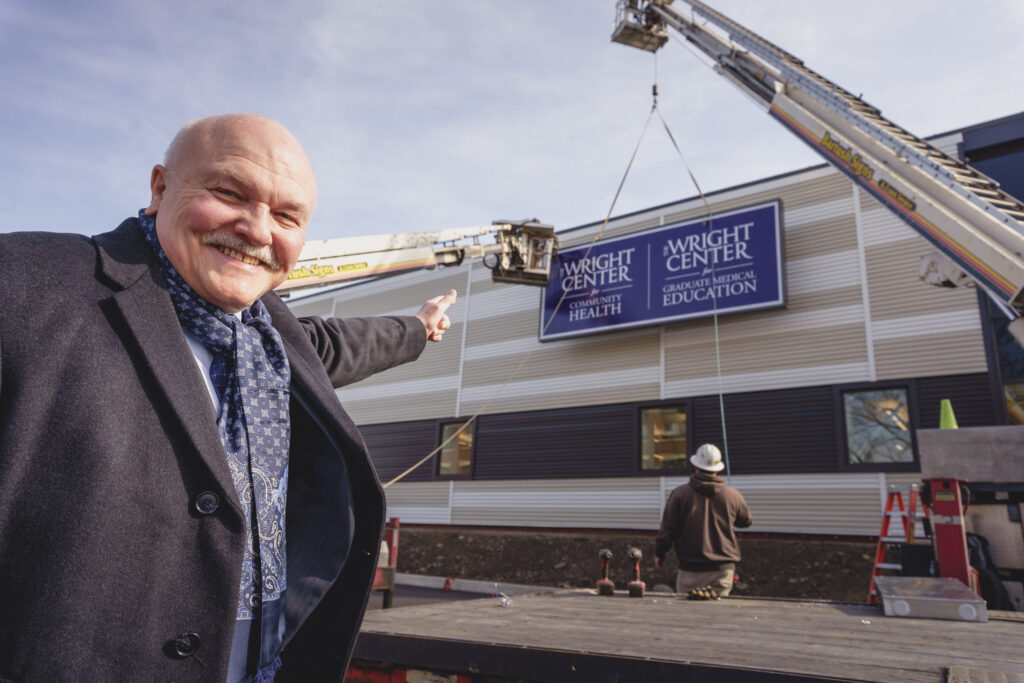
Gerard Geoffroy, immediate past chair of The Wright Center for Community Health Board, in front of The Wright Center Scranton Practice as the sign is being hung.
Since 2003, The Wright Center for Community Health has been a federally recognized Ryan White provider, delivering high-quality HIV primary medical care, vital support services, and life-saving medications to uninsured and underserved individuals across seven counties in Northeast Pennsylvania. Today, The Wright Center’s Ryan White Clinic provides compassionate, patient-centered care to nearly 500 individuals through its clinical program, while its medical case management program offers critical support to about 300 clients – many of whom benefit from both services.
Lending a hand
The Wright Center remains deeply committed to uplifting the most under-resourced individuals and families across Northeast Pennsylvania, including those facing poverty, food insecurity, homelessness, social isolation, transportation barriers, and other significant hardships. Its nonprofit subsidiary, The Wright Center for Patient & Community Engagement (TWCPCE), drives these vital community outreach efforts, ensuring direct support reaches those in need.
In the 2024-25 fiscal year, TWCPCE distributed nutritious food to 2,648 local families through regional food drives at The Wright Center’s community health centers. It also provided 1,389 children with backpacks stocked with essential school supplies and assisted 726 patients with transportation to critical medical appointments. Additionally, TWCPCE helped 629 people with utility bill assistance and supplied clothing, including coats, hats, scarves, and gloves, to more than 22,000 individuals.
For more information about The Wright Centers for Community Health, Graduate Medical Education, and Patient & Community Engagement, visit TheWrightCenter.com or call 570-230-0019.