Dr. Renee Frank, secretary of the Pennsylvania Medical Society, presents certificates of recognition to, from left, Drs. Timothy Burke, William Dempsey, and Erin McFadden for their outstanding dedication to patient care.
The Pennsylvania Medical Society honored three Wright Center doctors as part of National Doctors Day on Monday, March 30. With a history dating back to 1933, the annual day of observance honors the skill, dedication, and commitment of physicians who care for their communities.
Dr. Renee Frank, secretary of the Pennsylvania Medical Society, presented certificates of recognition to, from left, Drs. Timothy Burke, William Dempsey, and Erin McFadden for their outstanding dedication to patient care.
The Wright Center is celebrating its 50th anniversary in 2026. Founded in 1976, The Wright Centers for Community Health, Graduate Medical Education, and Patient & Community Engagement are a physician-led, community-owned nonprofit and a cornerstone of health care in the region. The organization employs more than 665 professionals – including nearly 200 resident and fellow physicians – and trains more than 200 interprofessional health care learners each year.
In fiscal year 2024-25, The Wright Center served about 38,300 unique patients across its growing network of community health centers in Lackawanna, Luzerne, Wayne, and Wyoming counties, including its mobile medical and dental unit, Driving Better Health. As a nonprofit Federally Qualified Health Center Look-Alike and safety-net provider, The Wright Center serves all patients, regardless of insurance status, ZIP code, or ability to pay. No patient is turned away due to an inability to pay.
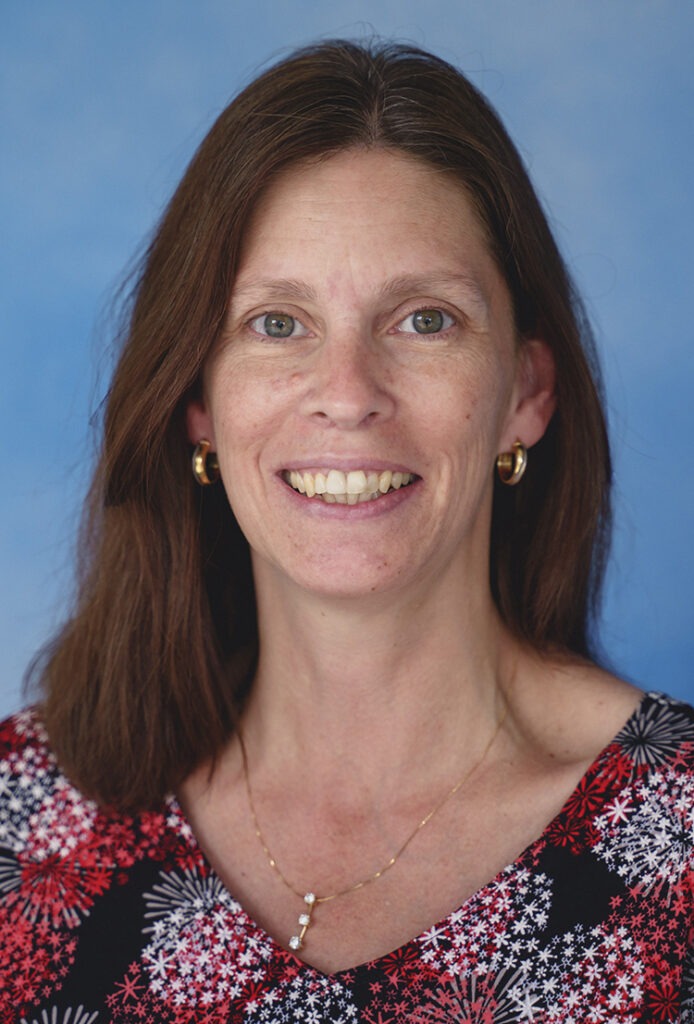
Dr. Jumee Barooah, senior vice president of education and designated institutional official for The Wright Center for Graduate Medical Education, has been named to a list of female role models across the state who exemplify ambition, creativity, and impact on their communities.
Dr. Jumee Barooah
City & State Pennsylvania, a multimedia news organization dedicated to covering the state’s politics and policy, included Dr. Barooah on its annual “Above and Beyond – Women” list, highlighting Pennsylvania’s most influential female leaders in government, advocacy, business, academia, media, and more. She joins 34 other women on City & State Pennsylvania’s list, including Shelley Riser, president and CEO of the Pennsylvania Association of Community Health Centers, and Holly Pilcavage, vice president of enrollment management and student success at Luzerne County Community College. To read the complete list, visit cityandstatepa.com.
In addition to being quadruple board-certified in internal medicine, addiction medicine, obesity medicine, and lifestyle medicine, Dr. Barooah works to improve the health and welfare of communities by providing whole-person primary and preventive health services and training the next generation of physicians.
Dr. Barooah leads one of the nation’s largest Teaching Health Center Graduate Medical Education Safety-Net Consortiums, overseeing the training of nearly 200 resident physicians and fellows. She has woven wellness, resiliency, and professional fulfillment into the fabric of graduate medical education, leading the development of a comprehensive wellness curriculum, creating new roles focused on clinician well-being, and championing visionary initiatives.
“Dr. Barooah’s impact is measurable and profound,” said Brian Ebersole, senior vice president of strategic enterprise and ecosystem development at The Wright Centers for Community Health and Graduate Medical Education. “Under her leadership, resident confidence and satisfaction have risen sharply, scholarly output has increased dramatically, and The Wright Center has deepened its commitment to trauma-informed, community-based care.”
The Wright Centers for Community Health and Graduate Medical Education’s Annual Internship Capstone Poster Day in 2025 was held at its community health center in Scranton. Participating interns and the schools they are attending, kneeling from left, are Paige Walsh, University of Pittsburgh; Mya Maus, The University of Scranton; Noah Lynch, Elizabethtown College; Matthew Dombrowski, The University of Scranton; Shane Cegelka, King’s College; and Alexander Franklin, The University of Scranton; seated from left, Rebekah Feinberg, A.T. Still University; Remy Turrell, Wyoming Seminary; Krittika Boruah, Wyoming Seminary; Katherine Mena Pereyra, American University; Jiya Shah, Abington Heights High School; and Patricia McAndrew, King’s College; standing from left, Alivia Minich, Penn State; Leelah Farrell, New York University; Andrew Clark, Duquesne University; Aidan Colleran, Penn State; Thomas Quinn, Penn State; Nathan Micknick, The University of Scranton; Thomas Fiorelli, University of Pittsburgh; Gabriella Staback, University of Denver; Margaret McGrath, Fairfield University; Rina Hanumali, Villanova University; and Minh Bauch, Pratt Institute.
The Wright Centers for Community Health and Graduate Medical Education is seeking high school and college students interested in hands-on experience in a variety of health care-related careers.
The application deadline for The Wright Center’s paid summer internship program is April 10. For more information or to apply, visit TheWrightCenter.org/internships.
Positions are available in a variety of departments, including administration, clinical, finance, legal, and marketing and communications. Internships last nine weeks for college students, starting June 8, and seven weeks for high school students, beginning June 22.
Unique to The Wright Center’s program is that each participant will complete an Internship Capstone Project focused on a particular aspect of what they learned. At the end of the summer, interns gather to share their projects with Wright Center board members, executives, and employees, and to answer questions about their findings, internship experiences, and plans. In 2025, The Wright Center hosted 26 high school and college interns.
“Health care is among the fastest-growing sectors in the United States, and it offers a wide range of career opportunities,” said Kellie Knesis, vice president of human resources and chief human resources officer for The Wright Centers. “From information technology and finance to operations, administration, education, and marketing, our organization provides a variety of roles through which students can explore exciting careers in health care while gaining valuable experience for their futures.”
The Wright Center is celebrating its 50th anniversary in 2026. Founded in 1976, The Wright Center is a physician-led, community-owned nonprofit and a cornerstone of health care in the region. The organization brings together The Wright Center for Community Health, The Wright Center for Graduate Medical Education, and The Wright Center for Patient & Community Engagement under one unified mission. It employs more than 665 professionals – including nearly 200 resident and fellow physicians – and trains more than 200 interprofessional health care learners each year.

In fiscal year 2024-25, The Wright Center served about 38,300 unique patients across its growing network of community health centers in Lackawanna, Luzerne, Wayne, and Wyoming counties, including its mobile medical and dental unit, Driving Better Health. As a Federally Qualified Health Center Look-Alike and safety-net provider, The Wright Center serves all patients, regardless of insurance status, ZIP code, or ability to pay. No patient is turned away due to an inability to pay.
The Wright Center for Graduate Medical Education welcomed 62 new resident physicians into residency programs on National Match Day for aspiring doctors on March 20.
The National Resident Matching Program’s Match Day is held annually on the third Friday of March. Medical students nationwide and around the world simultaneously learn which U.S. residency program they will train in for the next three to seven years. It is one of the most important and competitive processes in the medical school experience.
The Wright Center for Graduate Medical Education eagerly anticipates Match Day each year, when it learns which medical school graduates will continue their training in its residency programs accredited by the Accreditation Council for Graduate Medical Education (ACGME). The Wright Center is among the nation’s largest U.S. Health Resources and Services Administration (HRSA)-funded Teaching Health Center Graduate Medical Education Consortiums, training nearly 200 physicians annually.
The Wright Center matched resident physicians in the following regional programs: Internal Medicine Residency (43), Family Medicine – Scranton (6), and Physical Medicine & Rehabilitation Residency (7). Two resident physicians were also welcomed into the Internal Medicine-Geriatrics Integrated Residency and Fellowship Pathway, commonly known as the Combined Med-Geri Pathway, and four residents will join the Family Medicine – HealthSource of Ohio Residency Program, a collaboration between The Wright Center for Graduate Medical Education and HealthSource of Ohio in Hillsboro.
The new resident physicians will begin their program on July 1. The incoming residents hail from 14 countries: Pakistan (17), the United States (17), India (7), Jordan (6), the United Arab Emirates (4), Egypt (3), and Canada (1), Georgia (1), Ireland (1), Kazakhstan (1), Lebanon (1), Nepal (1), Nigeria (1), and Turkey (1).
The Wright Center received 11,019 applications and interviewed 574 candidates, or about 5.2% of the applicants. The National Resident Matching Program makes residency matches, using a mathematical algorithm to pair graduating medical students with open training positions at teaching health centers, educational consortia, hospitals, and other institutions across the U.S. The model considers the top choices of both students and residency programs.
“Match Day is always a highlight – a celebration of our learners’ hard work, resilience, and the bright futures ahead of them,” said Jumee Barooah, M.D., FACP, senior vice president of education and designated institutional official at The Wright Center for Graduate Medical Education. “This special day represents not only the next chapter for our new resident physicians, but also our ongoing commitment to our mission that strengthens community health by improving the health and welfare of our communities through responsive, whole-person health services for all and the sustainable renewal of an inspired, competent workforce that is privileged to serve.”
The Wright Center is celebrating its 50th anniversary in 2026. Founded in 1976, The Wright Centers for Community Health, Graduate Medical Education, and Patient & Community Engagement are a physician-led, community-owned nonprofit and a cornerstone of health care in the region. The organization employs more than 665 professionals and trains more than 200 interprofessional health care learners each year.
Dr. Jumee Barooah
The Wright Center for Graduate Medical Education offers ACGME-accredited residency programs in four disciplines – internal medicine, family medicine, physical medicine & rehabilitation, and the combined med-geri pathway – as well as fellowships in cardiovascular disease, gastroenterology, and geriatrics.
In fiscal year 2024-25, The Wright Center served about 38,300 unique patients across its growing network of community health centers in Lackawanna, Luzerne, Wayne, and Wyoming counties, including its mobile medical and dental unit, Driving Better Health. As a nonprofit Federally Qualified Health Center Look-Alike and safety-net provider, The Wright Center serves all patients, regardless of insurance status, ZIP code, or ability to pay. No patient is turned away due to an inability to pay.
The Wright Centers for Community Health and Graduate Medical Education are participating in a yearlong program alongside 25 other health care organizations to implement and measure professional well-being efforts.
The National Academy of Medicine (NAM) Action Collaborative on Clinician Well-Being and Resilience recently announced the selection of 26 organizations for the second cohort of the Change Maker Accelerators. The new cohort, launching this month, expands participation to include more community-based organizations and care delivery sites across all geographic regions that are committed to addressing health workforce burnout.
“We’re honored to be selected by the National Academy of Medicine to participate in the Change Maker Accelerators alongside leading health care organizations across our country. This initiative affirms our deep and enduring legacy commitment to foster a flourishing and resilient health care workforce,” said Dr. Linda Thomas-Hemak, president and CEO of The Wright Center. “By learning from and collaborating with this national community of like-minded changemakers, we can strengthen our efforts to advance health workforce well-being, restore joy and purpose in the practice of medicine, and ultimately improve the delivery of health care services to and health care workforce development for the patients, families, and communities we are privileged to serve.”
Dr. Linda Thomas-Hemak
Health workforce well-being is essential to ensuring that health professionals can provide high-quality, personalized, and respectful patient care. Health workers have been increasingly strained by their work environments, and as the pressures put on health workers increase, anxiety, depression, burnout, and overall dissatisfaction have skyrocketed. Health worker well-being is one of the greatest threats to the nation’s health care system: NAM estimated that burnout costs the U.S. health care system at least $4.6 billion annually, and over 60% of health care providers experience burnout.
Health care organizations are making measurable progress in reducing burnout and supporting clinician well-being, with recent polls showing improvements in self-reported well-being. The organizations selected to be Change Maker Accelerators are committed to building on these strides and using evidence-based strategies to address systemic challenges to well-being. The program provides participants with dedicated coaching, implementation support, and tools to continually improve their well-being operations.
Health workforce well-being is essential to ensuring that health professionals can provide high-quality, personalized, and respectful patient care. Health workers have been increasingly strained by their work environments, and as the pressures put on health workers increase, anxiety, depression, burnout, and overall dissatisfaction have skyrocketed. Health worker well-being is one of the greatest threats to the nation’s health care system: NAM estimated that burnout costs the U.S. health care system at least $4.6 billion annually, and over 60% of health care providers experience burnout.
Health care organizations are making measurable progress in reducing burnout and supporting clinician well-being, with recent polls showing improvements in self-reported well-being. The organizations selected to be Change Maker Accelerators are committed to building on these strides and using evidence-based strategies to address systemic challenges to well-being. The program provides participants with dedicated coaching, implementation support, and tools to continually improve their well-being operations.
“The Change Maker Accelerators model offers something truly unique in the health care well-being space: dedicated, personalized coaching that helps organizations turn commitment into action,” said NAM President Victor J. Dzau. “I’m thrilled to welcome this group of participants who are ready to do the hard work of driving meaningful change. With each cohort, we are building a growing body of evidence that will create a roadmap for sustainable well-being strategies across the entire health care sector.”
The Change Maker Accelerators Program is distinguished by its coaching and peer-to-peer community model. Participants engage in monthly small-group discussions and full-cohort learning sessions where they share successes, challenges, and best practices – among the cohort group and with the full Change Maker community through webinars, resource guides, poster sessions, and forthcoming publications. This year’s cohort will benefit from the experience of pilot cohort members, several of whom will serve as coaches to the new participants. Together, they will form a community of practice focused on the shared goal of creating and measuring the progress of sustainable, evidence-based well-being interventions.
Brian Ebersole
“Supporting the well-being of health workers requires intentional action and organizational commitment,” said Brian Ebersole, senior vice president of strategic enterprise and ecosystem development at The Wright Center. “By understanding the root causes of burnout and advancing policies and practices that strengthen our workforce, we are creating a culture where clinicians, care teams, staff, and learners can thrive. A resilient, supported workforce is essential to delivering high-quality, whole-person health services and improving the health and well-being of the communities we serve.”
NAM, an independent, evidence-based advisor in biomedical science, health, medicine, and related policy, launched the Clinician Well-Being Collaborative in 2017 to reverse trends in health worker burnout. In October 2022, it released the National Plan for Health Workforce Well-Being to drive collective action to strengthen health workforce well-being and restore the nation’s health, as more nurses, physicians, and public health employees than ever are poised to leave their professions.
Change Maker Accelerators
The following organization were selected for the 2026-27 cohort:
Advocate Health, Illinois; Alameda Health System, California; American College of Cardiology, District of Columbia; Cambridge Health Alliance, Massachusetts; Cancer Network of West Michigan, Michigan; Children’s National Hospital, District of Columbia; Community Health Network, Pennsylvania; Cox Health, Missouri; Dana-Farber Cancer Institute, Massachusetts; Essentia Health, Minnesota; Indiana Hospital Association, Indiana; Kansas City University, Missouri; LECOM Health, Pennsylvania; Legacy Health, Oregon; Lurie Children’s Hospital of Chicago, Illinois; NYC Health + Hospitals, New York; Parkland Health, Texas; Penn State Ross and Carol Nese College of Nursing, Pennsylvania; Tampa General Hospital, Florida; University of Maryland School of Medicine, Maryland; University of Hawaii at Manoa, School of Nursing & Dental Hygiene (SONDH), Hawaii; University of Texas Southwestern, Texas; University of Vermont Health, Vermont; University of Virginia Health, Virginia; VA Greater Los Angeles Healthcare System, California; The Wright Centers for Community Health and Graduate Medical Education, Pennsylvania.
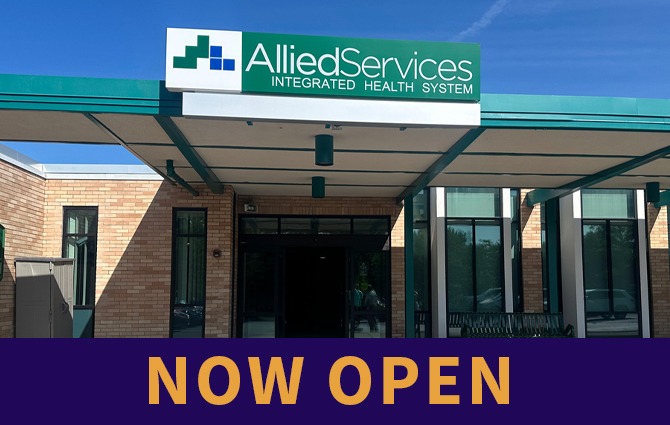
The Wright Center for Community Health’s first-ever pharmacy is now open for business.
The 1,400-square-foot pharmacy is located inside The Wright Center for Community Health Wilkes-Barre, 169 N. Pennsylvania Ave., providing convenient access to prescription medications and pharmacist support as part of The Wright Center’s integrated, whole-person primary and preventive health services delivery model. It is open to the public and can fill most prescriptions while customers wait. Some specialty medications may require 24 hours’ notice.
The pharmacy will operate from 8 a.m. to 5 p.m., Monday through Friday, under the leadership of licensed pharmacist Sarah Mucciolo, with support from licensed pharmacists Brianna Galvin and Michael Mucciolo. For more information, call the pharmacy at 570-866-3115.
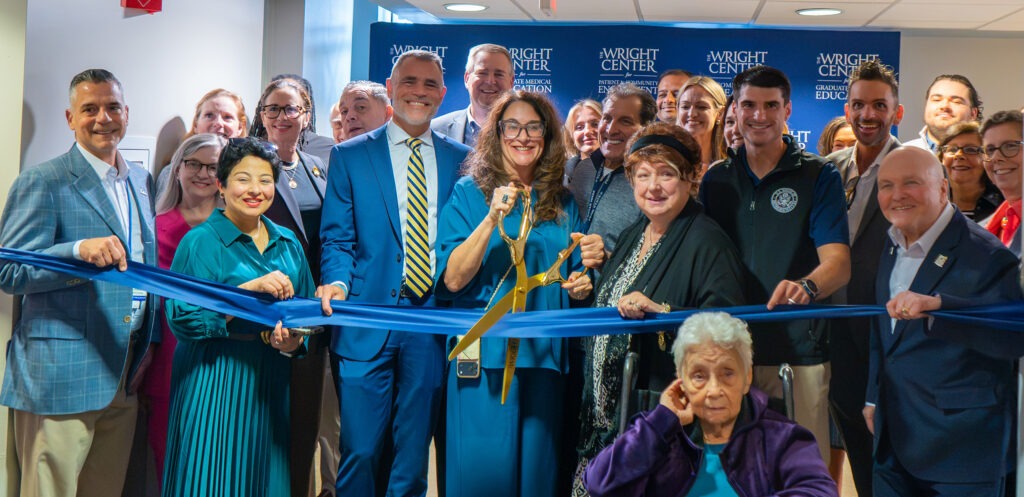
The Wright Center for Community Health held a ribbon-cutting ceremony for the new Wright Center Pharmacy Wilkes-Barre on Friday, March 13. The pharmacy provides convenient access to prescription medications and pharmacist support as part of The Wright Center’s integrated, whole-person primary and preventive health services delivery model.
It operates alongside a newly opened 1,400-square-foot laboratory run by HNL Lab Medicine that provides routine testing, further enhancing the services available at The Wright Center for Community Health Wilkes-Barre.
The new laboratory in Wilkes-Barre marks the third HNL Lab medicine patient service center located within a community health center, joining sites at The Wright Center for Community Health Mid Valley, 5 S. Washington Ave., Jermyn, and The Wright Center for Community Health Scranton, 501 S. Washington Ave.
“This pharmacy closes a critical gap by bringing medication access directly into our integrated care delivery environments, where primary care and specialty-enriched services, mental and behavioral health, dental care, laboratory testing provided by HNL Lab Medicine, and now pharmacy can all operate together under one roof,” Dr. Linda Thomas-Hemak, president and CEO of The Wright Centers for Community Health and Graduate Medical Education, said at March 13’s ribbon-cutting ceremony. “Importantly, this Wilkes-Barre pharmacy is designed to serve as a regional hub. Plans call for it to deliver prescriptions to our Community Health Centers in Lackawanna, Wayne, and Wyoming counties, ensuring that patients across our service area can access medications more conveniently, more affordably, and closer to home.”
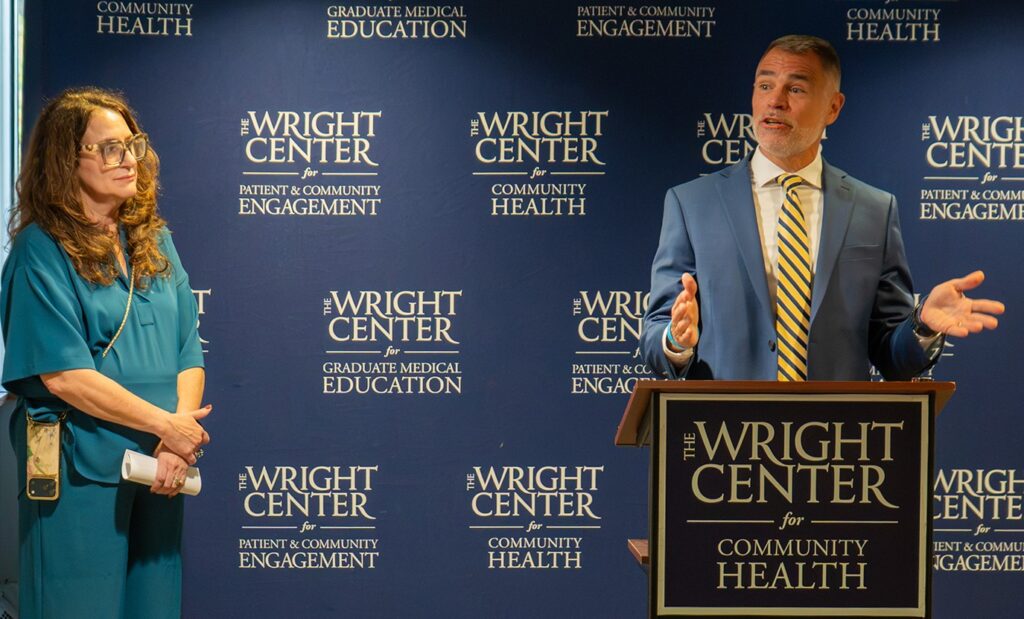
State Representative Eddie Day Pashinski, standing, and Wilkes-Barre Mayor George Brown, seated at right, delivered remarks during the ribbon-cutting ceremony for The Wright Center Pharmacy Wilkes-Barre.
At the ribbon-cutting, Dr. Thomas-Hemak was joined by The Wright Center’s executive team, state Representative Eddie Day Pashinski, Wilkes-Barre Mayor George Brown, and other local dignitaries.
“If health care is not affordable, it is not accessible,” state Representative Pashinski said during the ceremony. “The Wright Center has found a way to provide affordability and accessibility, and this shining example should become a standard for our entire country.”
Mayor Brown praised The Wright Center’s work to transform an empty office building into a health care destination in the heart of Wilkes-Barre, saying he’s proud of how the community health center has improved access to health care right in the heart of the city.
“The Wright Center has become the cornerstone for providing health care to everyone in the community,” he said, adding that as long as he serves as the city’s mayor, The Wright Center will have his continued support.
The Wright Center for Community Health Wilkes-Barre recently received a Pride of Place Award from the Wyoming Valley Chamber of Commerce. The community health center offers affordable, high-quality, whole-person primary care, behavioral health, dental, pharmacy, and laboratory services conveniently located in the heart of downtown Wilkes-Barre. The location is accessible to patients who rely on public transportation and is within walking distance of many of the city’s high-rise apartments. The renovation was made possible by $4 million in state grants awarded through the Redevelopment Assistance Capital Program and $8.5 million of New Market Tax Credit financing provided through The Reinvestment Fund.
The Wright Center for Community Health accepts all insurance plans and offers a sliding-fee discount program to help ensure whole-person primary and preventive health services are affordable for everyone. For more information, visit TheWrightCenter.org or call 570-491-0126.